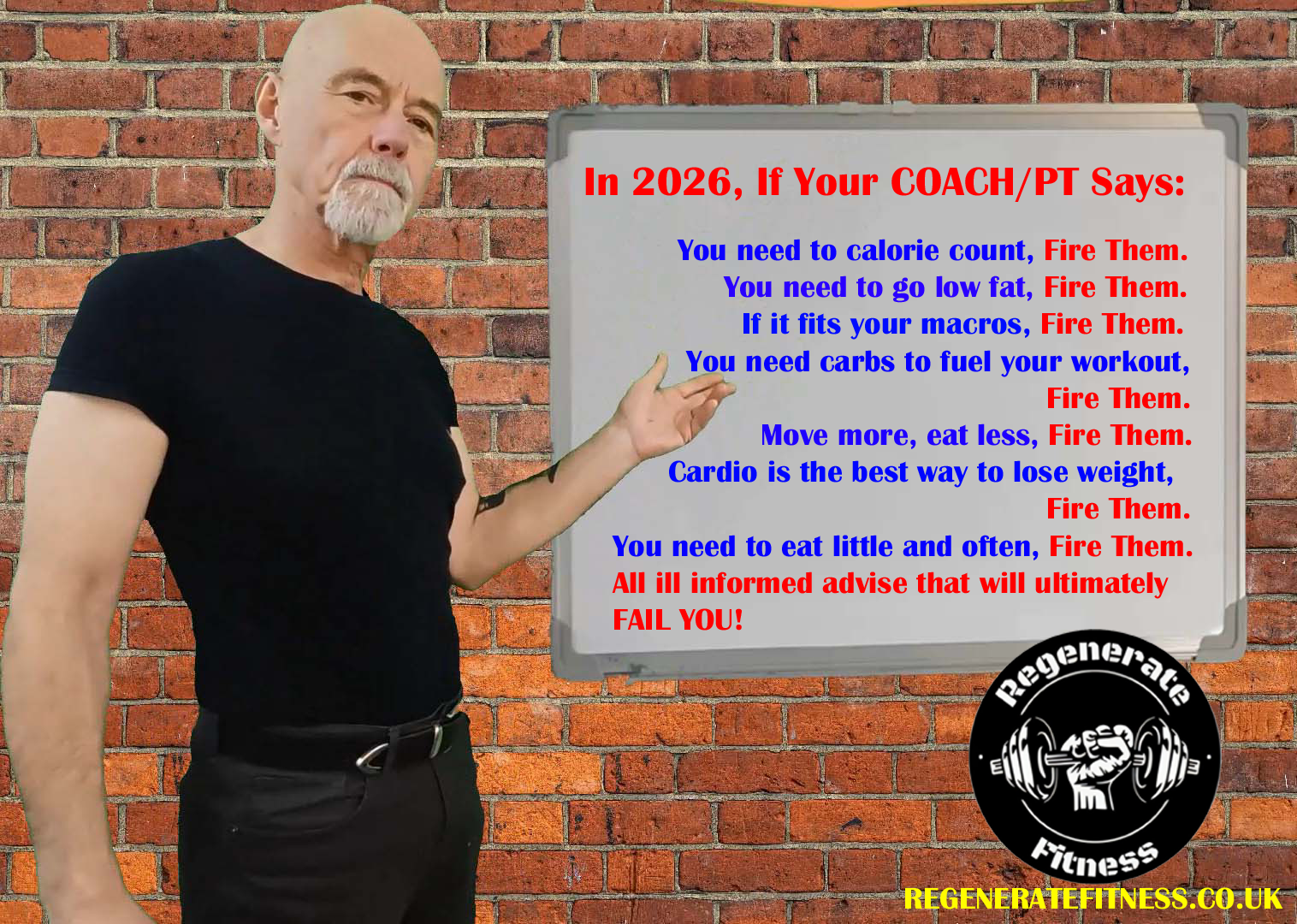
7 Reasons To Fire Your Trainer.
YOU NEED TO COUNT CALORIES.
Calories are an extremely inaccurate measure of a macronutrient because of the way in which the body utilises that macronutrient to produce energy via chemical reactions, especially regarding how a ‘calorific’ measurement of a foodstuff is even achieved.
The measurements on labels can be wildly inaccurate, up to 20% either way. Protein is rarely used directly as a potential fuel source, but rather for growth and maintenance, enzyme catalysis, hormonal messengers, immune defence, transport & storage, structural support, and fluid & pH balance.
Only in starvation will protein be used for energy production, and it is most likely to come from recycled protein from growth & maintenance that occurs all the time, which also includes the remnants of a fat cell when the body is utilising fat as an energy source. Only when the starvation period goes beyond many weeks will protein from lean mass be broken down and used to create energy.
YOU NEED TO GO LOW-FAT.
Fat is an essential nutrient which we require in larger quantities than is currently advised.
It’s involved in hormone production, vitamin absorption, and cellular structure. The brain is over 60% fat and needs essential fatty acids (omega-3 and omega-6). Contrary to some, it is the preferred fuel substrate. (Carbs are not an essential nutrient, but are dealt with urgently in a mixed meal, as an overplus concentration of glucose in the blood is deleterious to the body.)
If the body is predominantly using fat in the form of ketones at the time of a mixed carb/fat meal. The body will attempt to bring blood sugar levels down to homeostasis, suppressing ketone levels and stimulating glucose uptake in muscles and other tissues, including fat cells. The homeostatic level of glucose in the blood is about 1 gram per litre.
Some commentators conflate the process of prioritising carbs by arguing that it demonstrates that carbs are a preferred fuel when, in fact, it’s a damage limitation process.
As pointed out earlier, carbohydrates are non-essential exogenously, as we can produce all the carbohydrates we need for normal daily function.
IF IT FITS YOUR MACROS.
‘If it fits your macros’ is an asinine statement. It’s an atrocious approach to nutrition. Because of the absurd variance of what you could consume and what its effect could be.
YOU NEED CARBS TO FUEL YOUR WORKOUT.
This statement is incorrect for the majority of healthy gym goers. As stated earlier, carbs are not essential. If a client’s diet is carb-dominant, it can take many weeks to transition from being carb-dominant to being predominantly a fat-burner. It can take a while for a trainee to be comfortable training while in ketosis as opposed to running on glucose.
MOVE MORE EAT LESS.
Move more than what? Eat less than what? I’ve witnessed gym goers attend class after class and complain they cannot get fat-loss results.
I’ve also heard these same people say they eat next to nothing. It’s quite conceivable that ’moving less’ and ‘eating more’ could achieve the results these trainees are striving for. There is a good reason for this, and it’s about understanding the physiology of the human body.
There is a sweet spot where the right amount of stress on the human system will garner the best results. Too much stress will put the body into a defensive mode. Fat is a protective and valuable resource, and in a stressed state, the body will not easily give up fat, even in a nutritional deficit.
Likewise, working out too hard will not lead to positive results. It will lead to higher inflammation levels and an inability to recover quickly. Just like diet, there is a sweet spot for the amount of exercise one should do to gain the best results. More is not better, in most cases.
CARDIO IS THE BEST WAY TO LOSE WEIGHT.
I have summed up why in the previous paragraph. Cardio is also catabolic, which means all types of tissue break down, not just fat, but also lean mass. Long-term, strength training is by far the better approach for the average gym-goer looking to recomp their body. Muscle tissue is more demanding of energy, the look of muscle is more aesthetic, and muscle is denser, meaning you could look slimmer without the scale changing. A person’s muscle mass is also a predictor of their longevity and general health status.
YOU NEED TO EAT LITTLE AND OFTEN.
Eating is anabolic, which is not all bad. It means the body is building tissue, but not just building muscle; it also means storing fat. When insulin is permanently elevated, the body cannot utilise body fat for creating energy, which also means that the body is in a constant state of low levels of inflammation, as eating causes an inflammatory response. The optimum is two to three meals a day at most. The composition of these meals is also important. They need adequate fat and protein. The amount of protein in a meal needs to be enough to serve the body’s physiological requirements.