Tag Archives: body re-composition

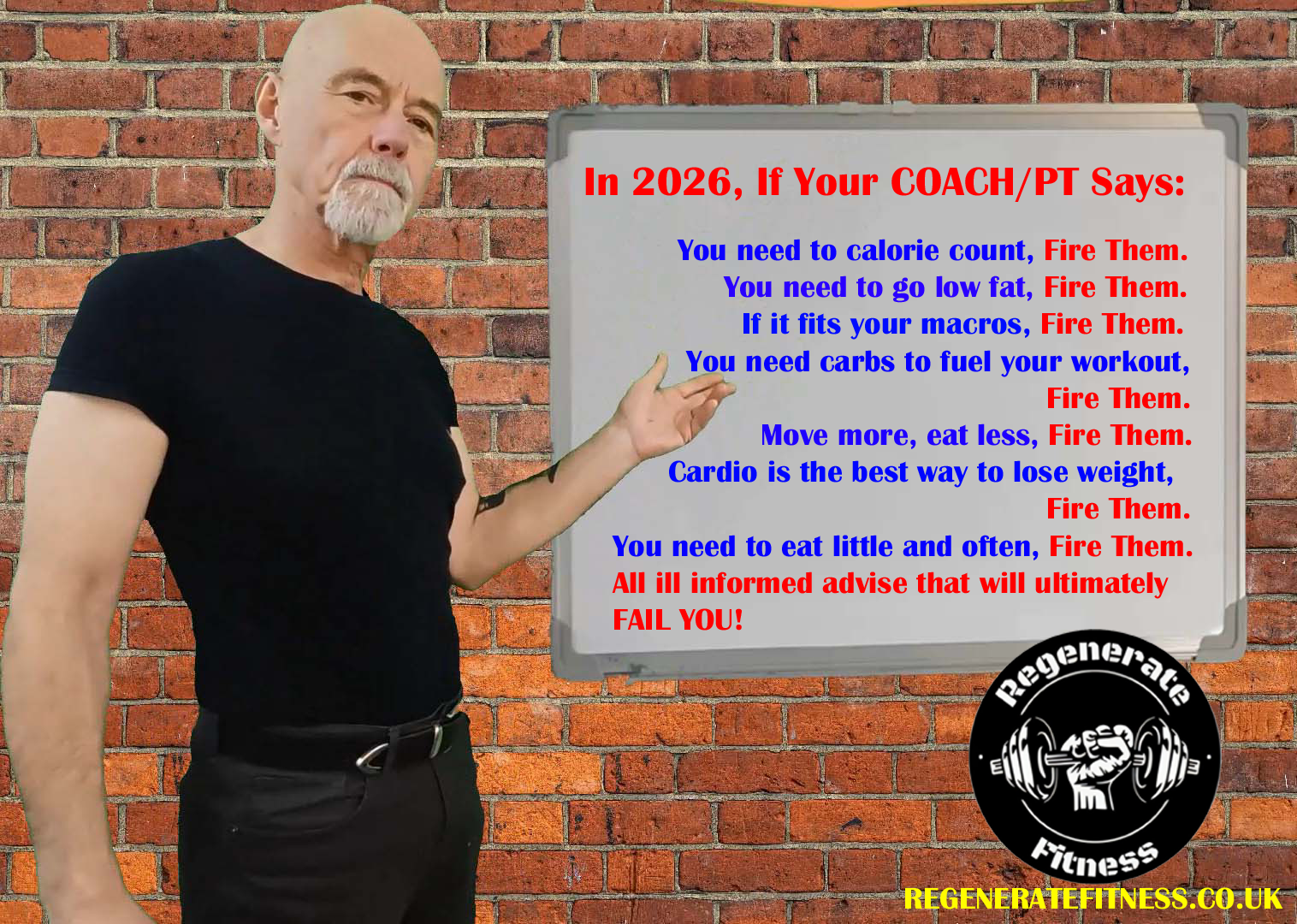
How To Evaluate Your Coach/PT.

7 Reasons To Fire Your Trainer.

YOU NEED TO COUNT CALORIES.

Calories are an extremely inaccurate measure of a macronutrient because of the way in which the body utilises that macronutrient to produce energy via chemical reactions, especially regarding how a ‘calorific’ measurement of a foodstuff is even achieved.

The measurements on labels can be wildly inaccurate, up to 20% either way. Protein is rarely used directly as a potential fuel source, but rather for growth and maintenance, enzyme catalysis, hormonal messengers, immune defence, transport & storage, structural support, and fluid & pH balance.

Only in starvation will protein be used for energy production, and it is most likely to come from recycled protein from growth & maintenance that occurs all the time, which also includes the remnants of a fat cell when the body is utilising fat as an energy source. Only when the starvation period goes beyond many weeks will protein from lean mass be broken down and used to create energy.

YOU NEED TO GO LOW-FAT.

Fat is an essential nutrient which we require in larger quantities than is currently advised.

It’s involved in hormone production, vitamin absorption, and cellular structure. The brain is over 60% fat and needs essential fatty acids (omega-3 and omega-6). Contrary to some, it is the preferred fuel substrate. (Carbs are not an essential nutrient, but are dealt with urgently in a mixed meal, as an overplus concentration of glucose in the blood is deleterious to the body.)

If the body is predominantly using fat in the form of ketones at the time of a mixed carb/fat meal. The body will attempt to bring blood sugar levels down to homeostasis, suppressing ketone levels and stimulating glucose uptake in muscles and other tissues, including fat cells. The homeostatic level of glucose in the blood is about 1 gram per litre.

Some commentators conflate the process of prioritising carbs by arguing that it demonstrates that carbs are a preferred fuel when, in fact, it’s a damage limitation process.

As pointed out earlier, carbohydrates are non-essential exogenously, as we can produce all the carbohydrates we need for normal daily function.

IF IT FITS YOUR MACROS.

‘If it fits your macros’ is an asinine statement. It’s an atrocious approach to nutrition. Because of the absurd variance of what you could consume and what its effect could be.

YOU NEED CARBS TO FUEL YOUR WORKOUT.

This statement is incorrect for the majority of healthy gym goers. As stated earlier, carbs are not essential. If a client’s diet is carb-dominant, it can take many weeks to transition from being carb-dominant to being predominantly a fat-burner. It can take a while for a trainee to be comfortable training while in ketosis as opposed to running on glucose.

MOVE MORE EAT LESS.

Move more than what? Eat less than what? I’ve witnessed gym goers attend class after class and complain they cannot get fat-loss results.

I’ve also heard these same people say they eat next to nothing. It’s quite conceivable that ’moving less’ and ‘eating more’ could achieve the results these trainees are striving for. There is a good reason for this, and it’s about understanding the physiology of the human body.

There is a sweet spot where the right amount of stress on the human system will garner the best results. Too much stress will put the body into a defensive mode. Fat is a protective and valuable resource, and in a stressed state, the body will not easily give up fat, even in a nutritional deficit.

Likewise, working out too hard will not lead to positive results. It will lead to higher inflammation levels and an inability to recover quickly. Just like diet, there is a sweet spot for the amount of exercise one should do to gain the best results. More is not better, in most cases.

CARDIO IS THE BEST WAY TO LOSE WEIGHT.

I have summed up why in the previous paragraph. Cardio is also catabolic, which means all types of tissue break down, not just fat, but also lean mass. Long-term, strength training is by far the better approach for the average gym-goer looking to recomp their body. Muscle tissue is more demanding of energy, the look of muscle is more aesthetic, and muscle is denser, meaning you could look slimmer without the scale changing. A person’s muscle mass is also a predictor of their longevity and general health status.

YOU NEED TO EAT LITTLE AND OFTEN.

Eating is anabolic, which is not all bad. It means the body is building tissue, but not just building muscle; it also means storing fat. When insulin is permanently elevated, the body cannot utilise body fat for creating energy, which also means that the body is in a constant state of low levels of inflammation, as eating causes an inflammatory response. The optimum is two to three meals a day at most. The composition of these meals is also important. They need adequate fat and protein. The amount of protein in a meal needs to be enough to serve the body’s physiological requirements.

Body Re-composition. 10 Myths, Truths & Lies.

Body re-composition is the main goal of most gym goers and here are 10 Facts to help you focus on that goal.

#1 Women will get bulky lifting heavy weights.

The average women looking for body re-composition will get a fitter, firmer, leaner look by lifting relatively heavy weight. This will increase BMR, your Basel Metabolic Rate.

This in turn will lead to higher calorie burn. Providing there is a slight caloric deficit of the higher calorie demand that has now been created, fat loss will happen fairly easily in the initial weeks and early months of training.

Only Women with a clear objective to get competitively strong as power lifters and body builders are likely to get bulky lifting weights. That training would need to be intensive and certainly doesn’t happen overnight.

#2 Eating Only healthy foods will cause fat loss.

Healthy or “clean” eating, though much more beneficial, will not guarantee weight loss. Energy balance is still the key You still need to eat less calories than you brun everyday.

The way quality whole foods aid weight loss is because they tend to be less calorie dense. Agood balance of fibre, protein and quality fats, helps with the feeling of satiety.
Processed foods tend to be calorie dense and much less filling as they are quickly digested, so it is easy to over eat.

#3 You need to do cardio to lose weight.

Cardio Vascular exercise, the sort that gets you sweaty and breathless, is really effective in the first few weeks of a person’s fitness and weight loss regime. The results will tail off very quickly after this period.

You may have heard or read that exercise is a poor way to lose weight, this is most certainly true. Diet is much more important in controlling body weight.

This is because adaptation happens fast initially as working out in any way from being sedentary will get results. The reason improvements stop is usually down to the exercise regime no longer challenging the body.

Weight loss should be about losing body fat. A much better approach to body re-composition is to do strength training.

A higher lean mass will require a larger amount of energy to maintain, meaning a higher daily calorie intake needed. read strength v cardio

#4 You can target areas to lose fat.

Whatever you may have read, it is not possible to spot reduce fat in any area of the body. Everyone stores fat in a unique way to them. The body tends to lose fat in the reverse way that it gains it.

#5 lifting heavy will hurt my back/lifting heavy is dangerous.

Providing someone has no pre-existing issues precluding them from lifting weight, lifting heavy weight is the single best thing that a person can do to improve overall fitness and increase longevity.

Lifting weight is only dangerous when done with incorrect technique. Learning to lift weight correctly is a fantastically beneficial method of strengthening the back and all other areas of the body.

This will Improve overall strength, balance, co-ordination and physical appearance. Lifting weight can also benefit the cardiovascular system. The same cannot be said for cardio making you stronger.

#6 low weight high reps is a better method of toning for women.

Low weight high reps has an initial positive effect on an untrained individual but the “toning” effect is short lived. Further sessions may have an impact on endurance but that is all.

For muscles to adapt and get bigger, progressive overload has to be the driver. This essentially means that both weight and intensity have to increase.

This is a reason why exercise classes with weights tend to garner quick results that plateau after a number of weeks.

There is a finite limit that an individual, especially female participants can progress doing “timed” weight exercises with high reps. The limiting factor being how much weight that can be lifted safely in such a manner.

#7 Athletes are healthier than the average gym goer.

Although the average gym goer may not be as healthy as an athlete, great health can be achieved without striving too be an athlete.

Athletes are held in high esteem and can be role models when people pursue fitness. The truth is that in most instances athletes are not the healthiest people. An athlete trains in a way to be exceptionally good at a specific event. Optimal health is not the driver of their training regime, it is optimal performance.

Examples- A marathon runner trains for endurance, big strong muscles are not beneficial to the marathon runner but being stronger generally is better for health. Footballers, rugby players and players of similar sports suffer greatly in pursuit of performance carrying and suffering life altering injuries. Most sport stars suffer for their sport. They are fit for their sport but not always for everyday life.

#8 People over 60 should not lift weights.

There are always circumstances that preclude people from weight training but age is not one of them.
People over 60 should absolutely lift weight. Lifting weight or resistance exercise, especially as you age, is the single most important form of training that you should engage in. Studies now show that maintaining strength is the single best predictor of longevity.

#9 A woman should not exercise when pregnant.

I’m not a doctor and a pregnant women that wants to train should seek medical advice. That being said, research suggests that there are many exercises that are beneficial to a pregnant woman, even lifting weight especially if she trained before and upto, pregnancy.

If a pregnant woman is untrained it is probably advisable not to start to train. At the very least, seek medical advice.

#10 You cannot lose fat and build muscle at the same time.

The bro science community will tell you that you have to bulk to build muscle and cut to lose fat. This is a falsehood for the average novice weightlifter although it is probably true for the guys and girls that have years of proper training under their belts.


My own anecdotal evidence is that the body is well capable of build muscle and strength while losing weight. I suffered an injury to the femoral nerve in my left side. This caused my thigh muscles in my left leg to waste away through lack of use. I lost 2 inches in the girth of my left thigh. As I recovered and began to exercise, I not only regained my leg strength and girth, I also lost 3 kilos in weight.

The body is a fantastic adaptation “machine” and when needs must, the body will adapt in the way it needs to.
Untrained overweight individuals can begin a program to lift weight and lose fat on a slight calorie deficit.

Providing the diet has the adequate amount of macro and micro nutrients, the body will get stronger while tapping into the fat reserves to provide the extra energy needed for the training being applied. The effects can be profound at first but will tail off over time.